


What Is a Loanword?
A loanword is a word taken directly from one language and used in another without translation. For example, the English word “ballet” comes from French.
How Loanword Enter a Language
Languages borrow words for many reasons, such as trade, technology, fashion, food, or cultural influence.
Loanword Meaning in Everyday Life
Common loanword appear in everyday conversations. Words like “pizza” (Italian) or “sushi” (Japanese) are examples.
Loanword vs. Borrowed Concepts
Not all borrowed words are loanword. Some ideas are borrowed, but the words are translated, like “skyscraper” from French “gratte-ciel.”
Modern Usage of Loanwords
In modern English, loanword meaning are everywhere, especially in technology (“emoji” from Japanese) and lifestyle (“café” from French).
Loanwords in Different Languages
Every language has loanwords. For example, Japanese has many English loanwords like “コンピュータ” (computer).
Common Misunderstandings
A common misconception is that a loanword keeps its original meaning. Sometimes meanings shift over time in the new language.
Loanwords in Writing
Writers often use loanwords to add style, authenticity, or cultural reference to their text.
Loanwords in Speech
Loanwords are also common in casual speech. People may not realize they are using foreign words regularly.
Cultural Influence on Loanwords
Historical events, colonization, and globalization often introduce new loanwords into a language.
Pronunciation Changes
Loanwords are sometimes pronounced differently from their original language to fit local sounds.
Spelling Changes
Spelling can also change over time. For example, “yoga” is spelled the same in English but pronounced slightly differently than in Hindi.
Loanwords in Food
Food names are some of the most recognizable loanwords: “croissant,” “taco,” “mocha,” and “kimchi.”
Loanwords in Fashion
Fashion-related loanwords include “haute couture,” “beret,” and “lingerie.”
Loanwords in Technology
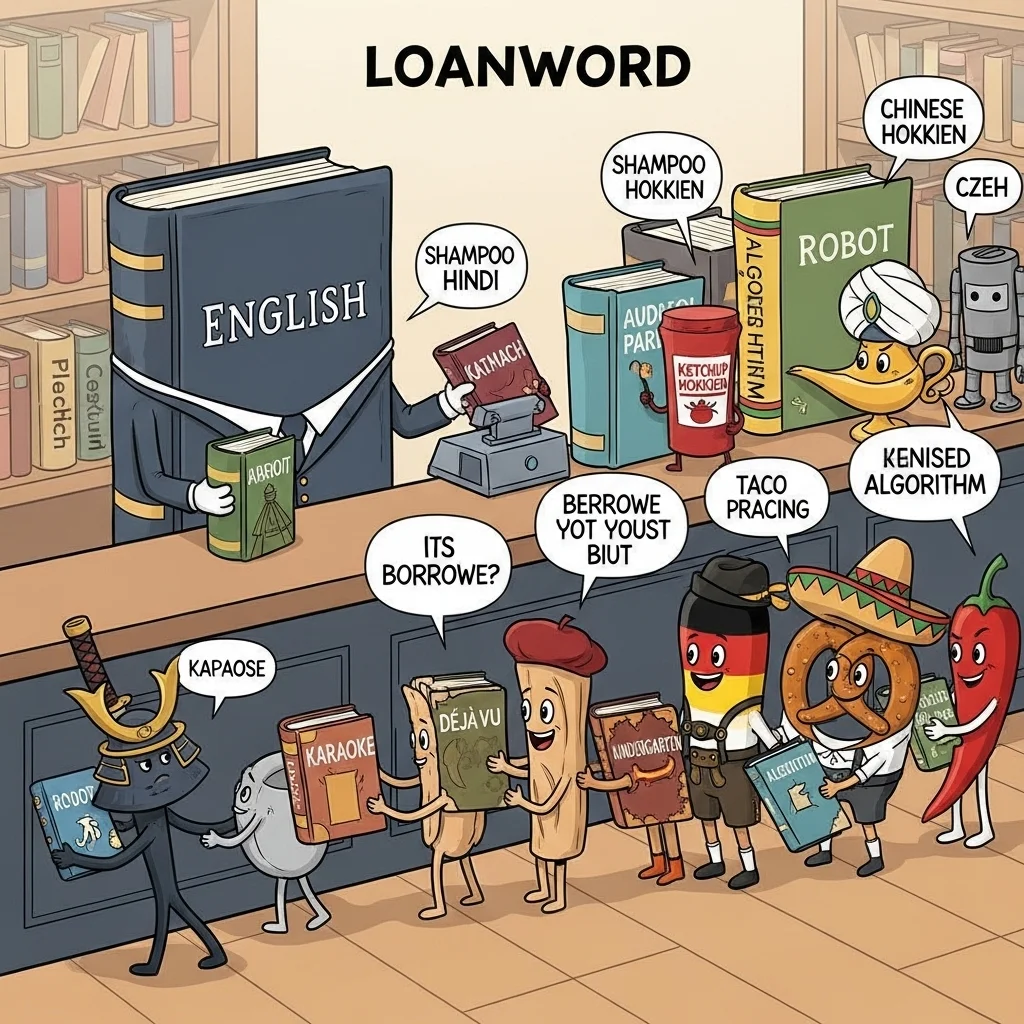
Technology spreads loanwords quickly: “robot” (Czech), “algorithm” (Arabic), and “avatar” (Sanskrit).
Legal and Business Loanwords
Business and law often borrow words: “fiancé” (French), “guru” (Sanskrit), “rendezvous” (French).
Loanwords and Slang
Some slang words are loanwords, often borrowed to sound trendy or modern.
Recognizing Loanwords
Loanwords can often be recognized by unusual spelling, accents, or pronunciation patterns.
How Loanwords Enter a Language
Languages borrow words for many reasons, such as trade, technology, fashion, food, or cultural influence.
Loanwords and Language Purity
Some languages resist loanwords to maintain “purity,” while others freely adopt them to stay modern.

Why Loanwords Matter
Loanwords enrich language, reflect culture, and help people communicate ideas not native to their own tongue.