
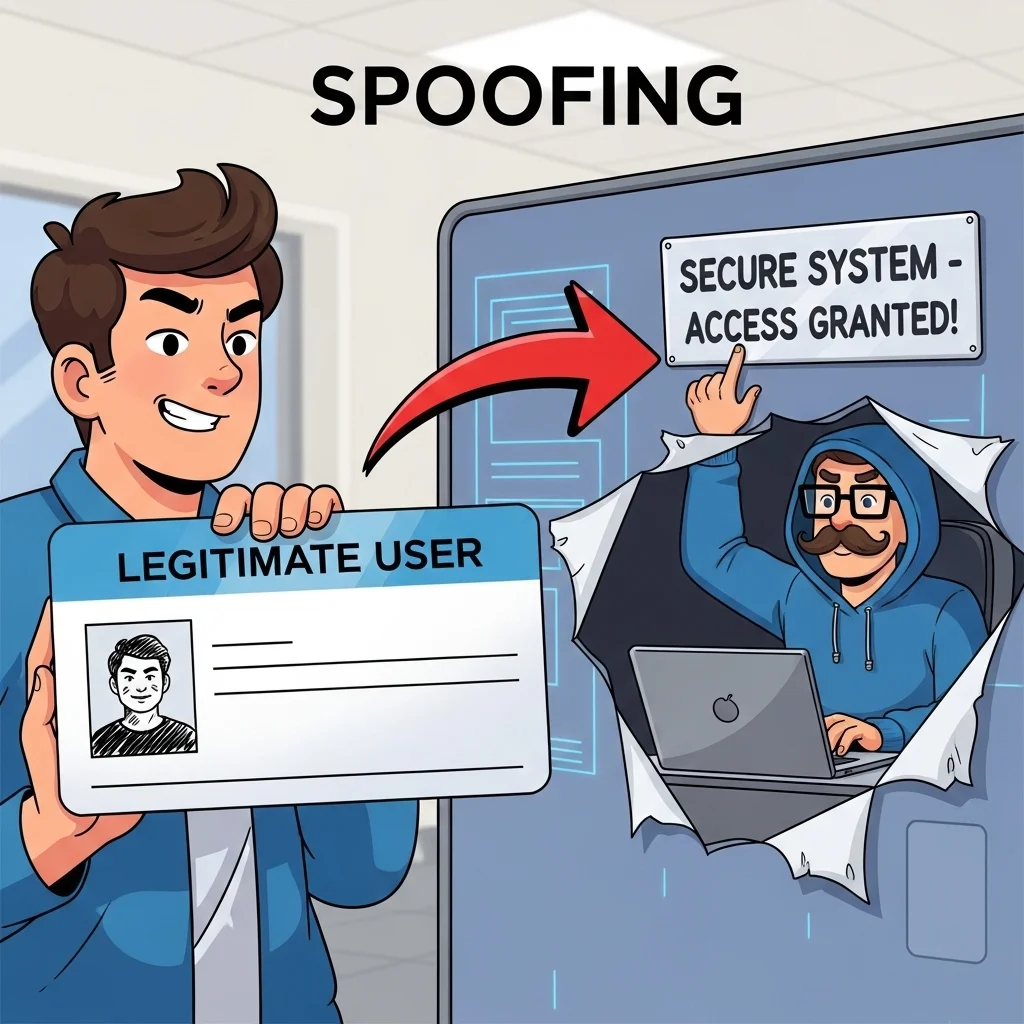

What Does Spoofing Meaning?
Spoofing means tricking or deceiving someone by pretending to be something or someone else. It often involves false identities, fake messages, or misleading information.
Spoofing Meaning in Simple Terms
In simple terms, spoofing is a trick or deception designed to make someone believe something is real when it is not.
Spoofing Meaning in Cybersecurity
In cybersecurity, spoofing refers to fake emails, websites, or IP addresses that pretend to be legitimate to steal information or cause harm.
Email Spoofing Meaning
Email spoofing happens when a hacker sends emails that appear to come from a trusted source to steal personal data or spread malware.
IP Spoofing Meaning
IP spoofing is when hackers disguise their IP address to gain unauthorized access to networks or computers.
Website Spoofing
Website spoofing involves creating fake websites that look like real ones to trick users into entering passwords or financial information.
Spoofing in Finance
In finance, spoofing is a market manipulation tactic where traders place fake orders to mislead other investors, then cancel them before execution.
Spoofing in Social Media
On social media, spoofing can involve fake accounts, fake profiles, or impersonation to trick followers or spread misinformation.
Spoofing vs Phishing
While both involve deception, phishing specifically tries to steal personal information, whereas spoofing can involve broader types of impersonation.
Spoofing vs Fraud
Fraud is the result or crime, while spoofing is the technique or method used to deceive.
How to Detect Spoofing
Signs include unusual sender addresses, incorrect website URLs, unexpected requests for personal information, and inconsistent behavior from accounts.

How to Protect Against Spoofing
Verify email senders
Check website URLs carefully
Use two-factor authentication
Keep software updated
Avoid sharing personal info with unknown sources
Spoofing in Entertainment
Spoofing can also mean parodying or mocking something for humor, like spoof movies or videos, but this is unrelated to scams or cybercrime.
Common Misunderstandings About Spoofing
Some people think spoofing only occurs online. In reality, it can happen in finance, phone calls, social media, and entertainment.
Spoofing in Modern Usage
Today, spoofing is widely discussed in cybersecurity awareness, banking, social media, and online communications to prevent fraud.
Why Spoofing Is Dangerous
Spoofing can lead to identity theft, financial loss, data breaches, and misinformation, making it important to understand and recognize.
Examples of Spoofing
Receiving an email that looks like it’s from your bank asking for your password.
Seeing a fake website designed to mimic a popular shopping site.
A trader placing fake stock orders to mislead the market.
Spoofing and Legal Implications
Many forms of spoofing are illegal, especially when they involve fraud, theft, or deception that causes financial or personal harm.

Spoofing in Communication
In digital communication, spoofing is often used by cybercriminals to gain trust and manipulate people.