


Concurrently Meaning in Simple Terms
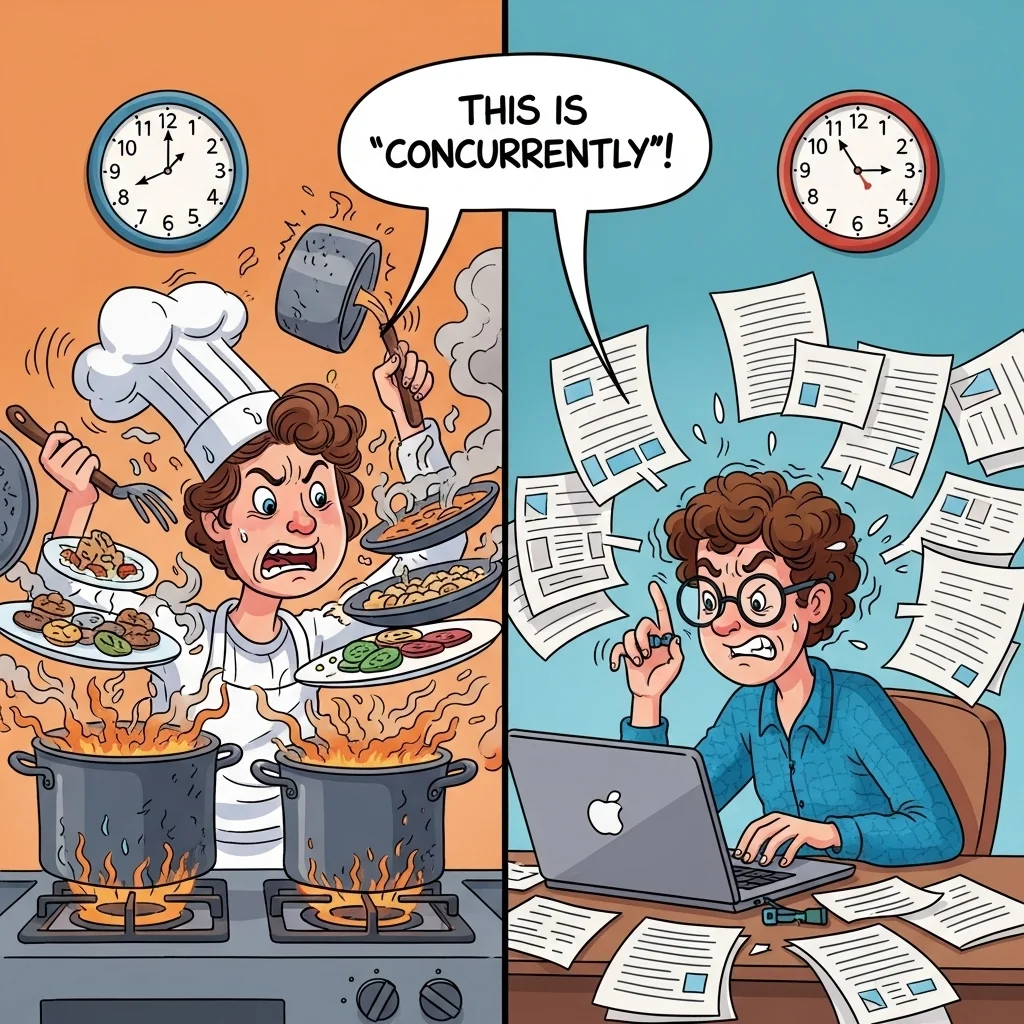
Concurrently means happening at the same time or simultaneously. Two or more things occur together instead of one after another.
Origin of the Word Concurrently
The word comes from the Latin concurrere, meaning “to run together.” This explains why concurrently refers to things happening together.
Concurrently Meaning in Daily Life
In daily life, concurrently can describe doing two activities at once, such as listening to music while working.
Concurrently Meaning in the Workplace
At work, concurrently often means handling multiple tasks or projects at the same time.
Concurrently Meaning in Education
In education, students may study two courses concurrently during the same semester.
Concurrently Meaning in Business
Businesses use concurrently when operations, processes, or launches run at the same time.
Concurrently Meaning in Technology
In technology, concurrent processes run at the same time, especially in computing and software systems.
Concurrently Meaning in Law
In legal terms, concurrently often refers to sentences or contracts that run at the same time, not one after another.
Concurrently vs Simultaneously
Both words mean the same thing, but concurrently is more formal and technical than simultaneously.
Concurrently vs Consecutively
Concurrently: At the same time
Consecutively: One after another
This difference is very important in legal and work contexts.
Concurrently Meaning in Formal Writing
Concurrently is commonly used in reports, policies, academic papers, and official documents.
Concurrently Meaning in Informal Speech
In casual conversation, people usually say “at the same time” instead of concurrently.
Common Misunderstandings About Concurrently
Some people think concurrently means quickly. It does not. It only refers to timing, not speed.
How to Use Concurrently Correctly
Use when actions overlap in time
Best for formal or professional writing
Avoid using it casually if simpler words fit better
Examples of Concurrently in Sentences
“She is working two jobs concurrently.”
“The courses will be taken concurrently.”
“The sentences will run concurrently.”
Concurrently Meaning in Project Management
Project managers use concurrently to describe tasks that progress together to save time.
Why Concurrently Is Often Used
It sounds precise and professional, especially when timing matters.
Benefits of Concurrent Activities
Working concurrently can improve efficiency, productivity, and time management when done carefully.
When Not to Use Concurrently
Avoid using it when actions happen one after another or when simple language is clearer.

Tips to Remember Concurrently
Same time
Overlapping actions
Formal word
Opposite of consecutively