


Excision Meaning in Simple Terms
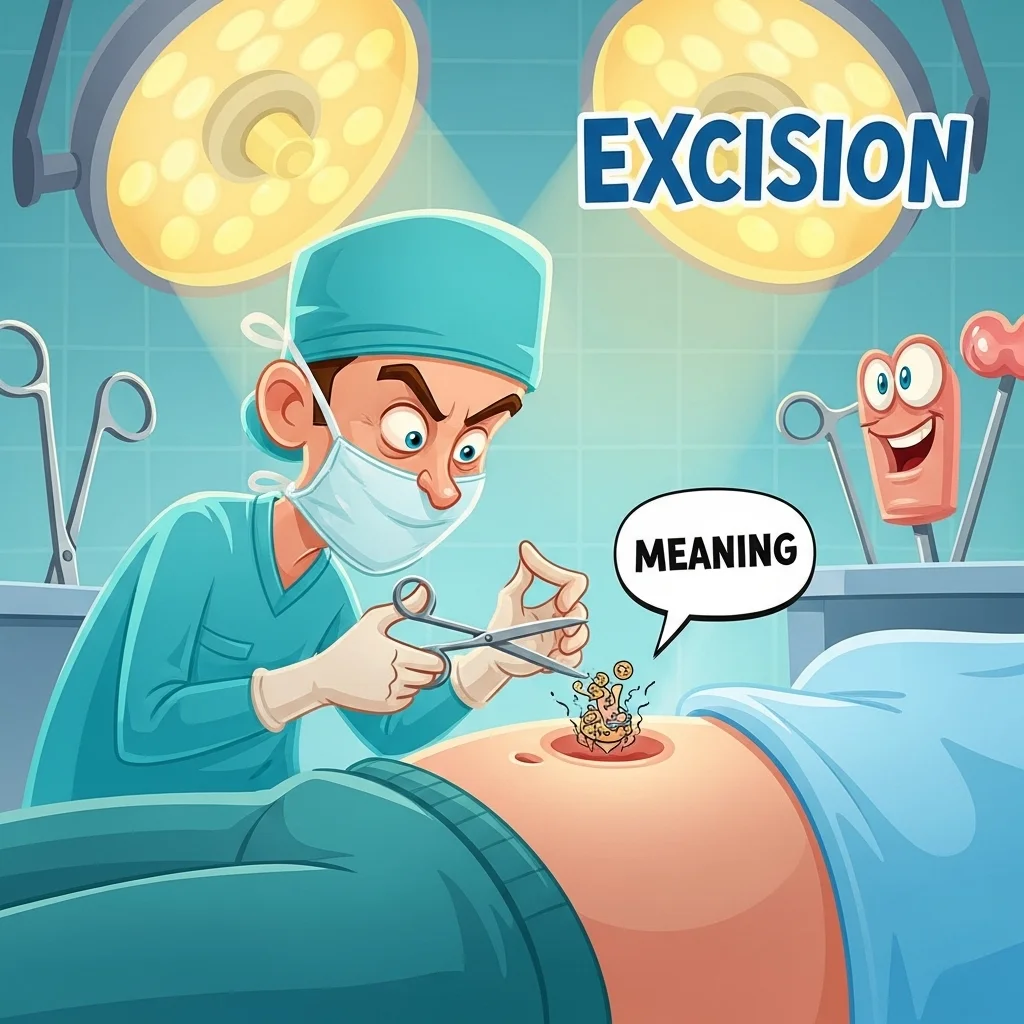
Excision means the act of cutting out or removing something, especially something unwanted or harmful.
Origin of the Word Excision
The word excision comes from Latin excidere, meaning “to cut out.”
Excision Meaning in General Use
In general language, excision refers to removing a part from a whole, whether physical or abstract.
Excision Meaning in Medical Terms
In medicine, excision means surgically removing tissue, a growth, or an organ from the body.
Excision Meaning in Surgery
Surgeons perform excision to remove tumors, cysts, infected tissue, or damaged body parts.
Excision Meaning in Healthcare
In healthcare, excision is often used in reports, diagnoses, and treatment plans involving removal procedures.
Excision Meaning in Law
In legal contexts, excision can mean removing a section of a document, law, or territory.
Excision Meaning in Government and Policy
Governments may use excision to describe removing areas from legal or administrative boundaries.
Excision Meaning in Writing and Editing
In writing, excision means cutting out unnecessary words, sentences, or sections to improve clarity.
Excision Meaning in Education
Teachers may refer to excision when instructing students to remove incorrect or irrelevant content.
Excision vs Removal
Excision: Cutting out, often precise
Removal: Taking away in general
Excision is more technical and specific.

Excision vs Deletion
Deletion usually refers to digital or written content, while excision often involves physical cutting or formal removal.
Excision Meaning in Formal Writing
Excision is a formal word commonly used in medical, legal, and academic texts.
Excision Meaning in Informal Speech
In casual conversation, people usually say “remove” instead of excision.
Common Misunderstandings About Excision
Some people think excision always refers to surgery, but it can apply to documents and ideas as well.
How to Use Excision Correctly
Use in formal or technical contexts
Refers to precise removal
Avoid using casually unless appropriate
Examples of Excision in Sentences
“The doctor recommended excision of the tumor.”
“The editor suggested excision of the paragraph.”
“The law included excision of outdated rules.”
Why Excision Is an Important Term
It clearly describes intentional and careful removal, which is crucial in professional communication.
Excision Meaning in Modern Usage
In 2026, excision is still widely used in medical, legal, and academic fields due to its precision.
Tips to Remember Excision
Means cutting out
Formal and technical
Used in medicine and law
More precise than remove