
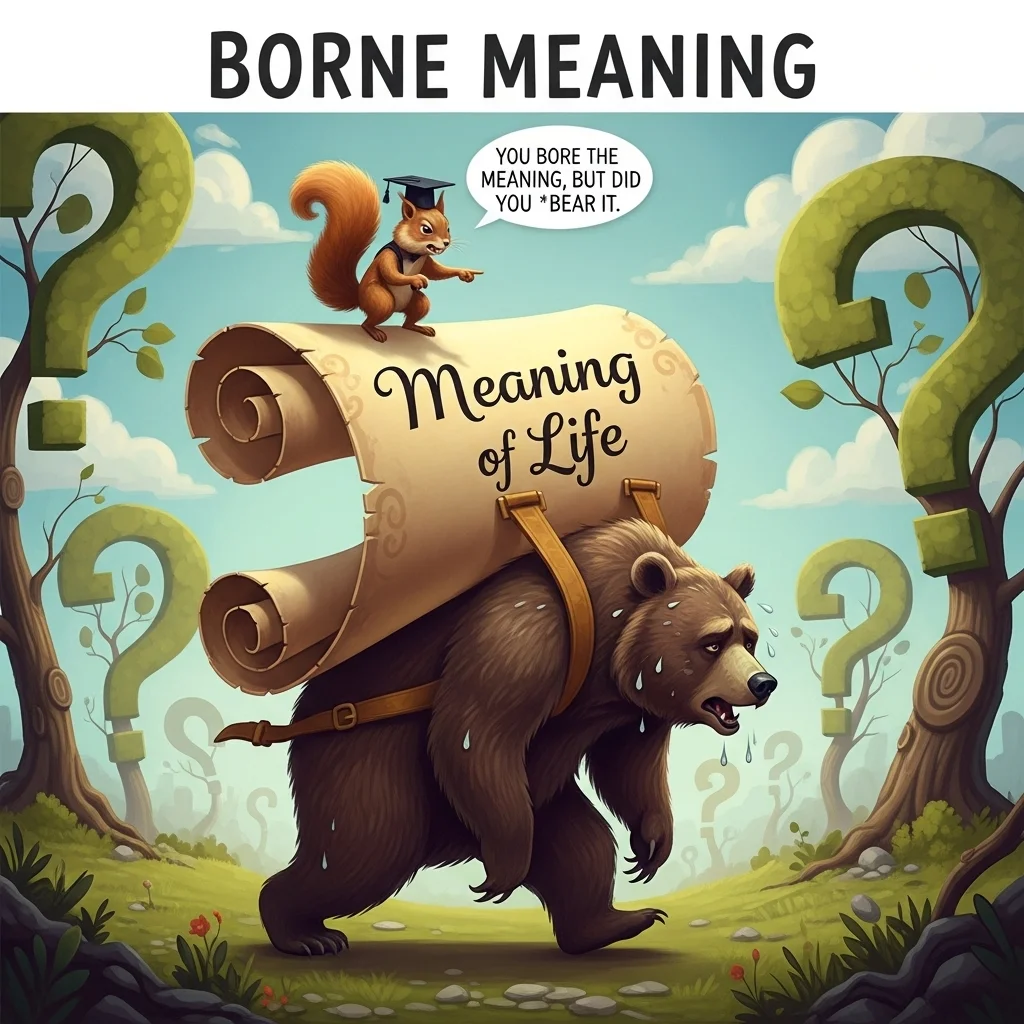

What Does Borne Mean
Borne is the past participle of the verb “bear.”
It generally means carried, supported, endured, or transported.
Borne Meaning in Simple Terms
In simple words, borne means something that has been carried or endured.
It often refers to responsibility, cost, or burden.
Verb Origin of the Word Borne
The word comes from the verb bear, which has many meanings.
“Bear” can mean to carry, tolerate, give birth, or support.
Borne Meaning in Grammar
Grammatically, borne is used with helping verbs like has, have, or had.
Example: The cost has been borne by the company.
Borne Meaning in Daily Life
In daily life, borne is used when talking about:
Costs
Responsibility
Emotional burden
Physical weight
Borne Meaning in Financial Context
In finance, borne means paid or covered.
Example: The expenses were borne by the employer.
Borne Meaning in Legal and Formal Writing
Legal and formal documents often use borne to indicate who carries responsibility.
It helps avoid confusion about obligations.
Borne Meaning in Emotional Context
Emotionally, borne can refer to pain, stress, or hardship endured.
Example: She has borne a great deal of pressure.
Borne Meaning in Transportation and Movement
Borne can describe something being carried or transported.
Example: Airborne particles are borne by the wind.
Borne Meaning in Scientific Usage
In science, borne is often used in compound words like waterborne or foodborne.
It indicates how something is carried or spread.
Borne vs Born Meaning
This is a very common confusion.
Borne = carried or endured
Born = brought into life

Example Showing Borne vs Born
Correct use of borne:
The risk was borne by the workers.
Correct use of born:
She was born in 1998.
Borne Meaning in Passive Sentences
Borne is often used in passive voice.
Example: The burden was borne by the team.
Common Phrases Using Borne
Some common expressions include:
Cost borne by
Responsibility borne by
Risk borne by
Borne Meaning in Professional Writing
Professional and academic writing prefers borne because it sounds formal and precise.
It is less common in casual speech.
Can Borne Be Used in Casual Conversation
It is correct but less common in casual talk.
People usually replace it with simpler words like carried or handled.
Common Misunderstandings About Borne
Many people mistakenly use born instead of borne.
This is grammatically incorrect in most cases.
How to Know When to Use Borne
Use borne when referring to:
Costs
Burdens
Responsibilities
Risks
Borne Meaning in Modern Usage
Today, borne is still widely used in business, law, science, and formal communication.
Its meaning remains stable and clear.
Why Borne Is Important in Clear Writing
Using borne correctly improves clarity and professionalism.
It helps communicate responsibility accurately.

Borne Meaning Explained Simply One More Time
To remember easily:
If something is carried or endured, it is borne.