
What Does Pyrite Mean?
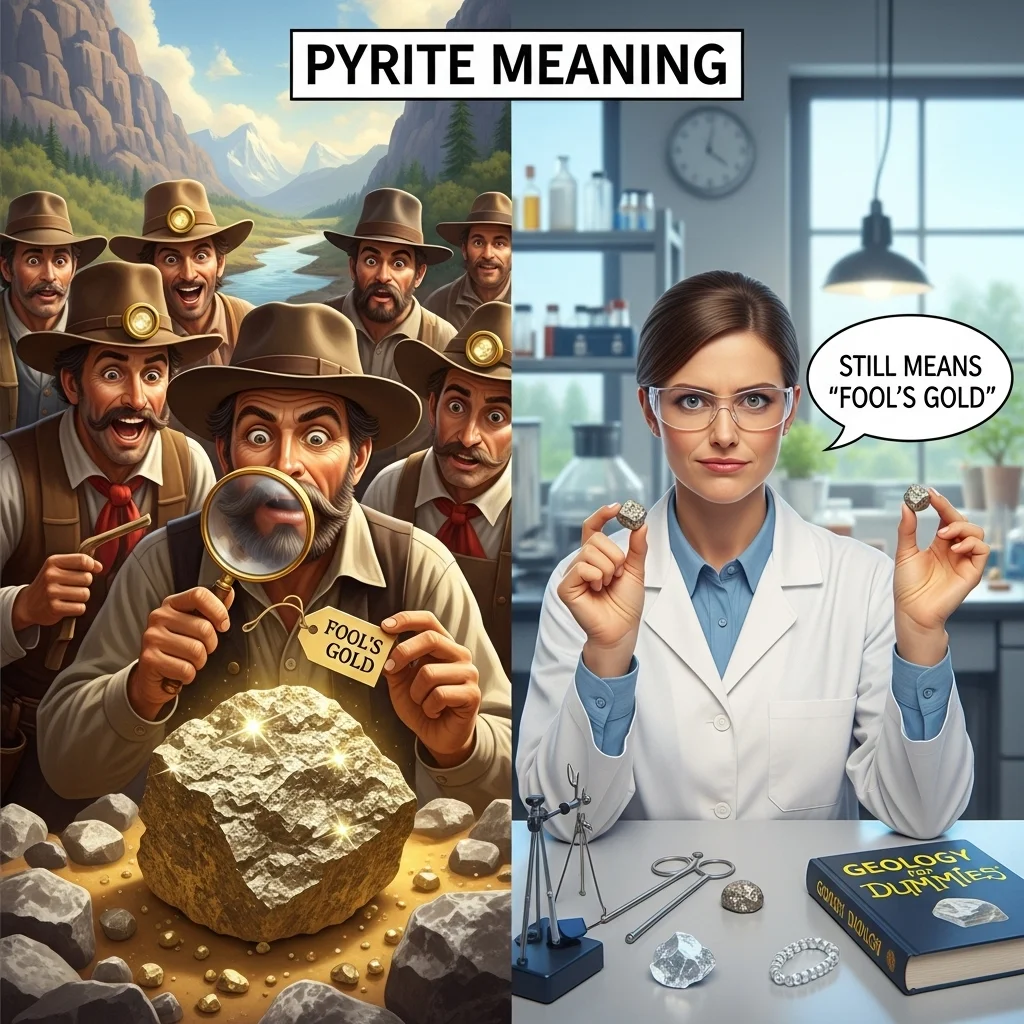
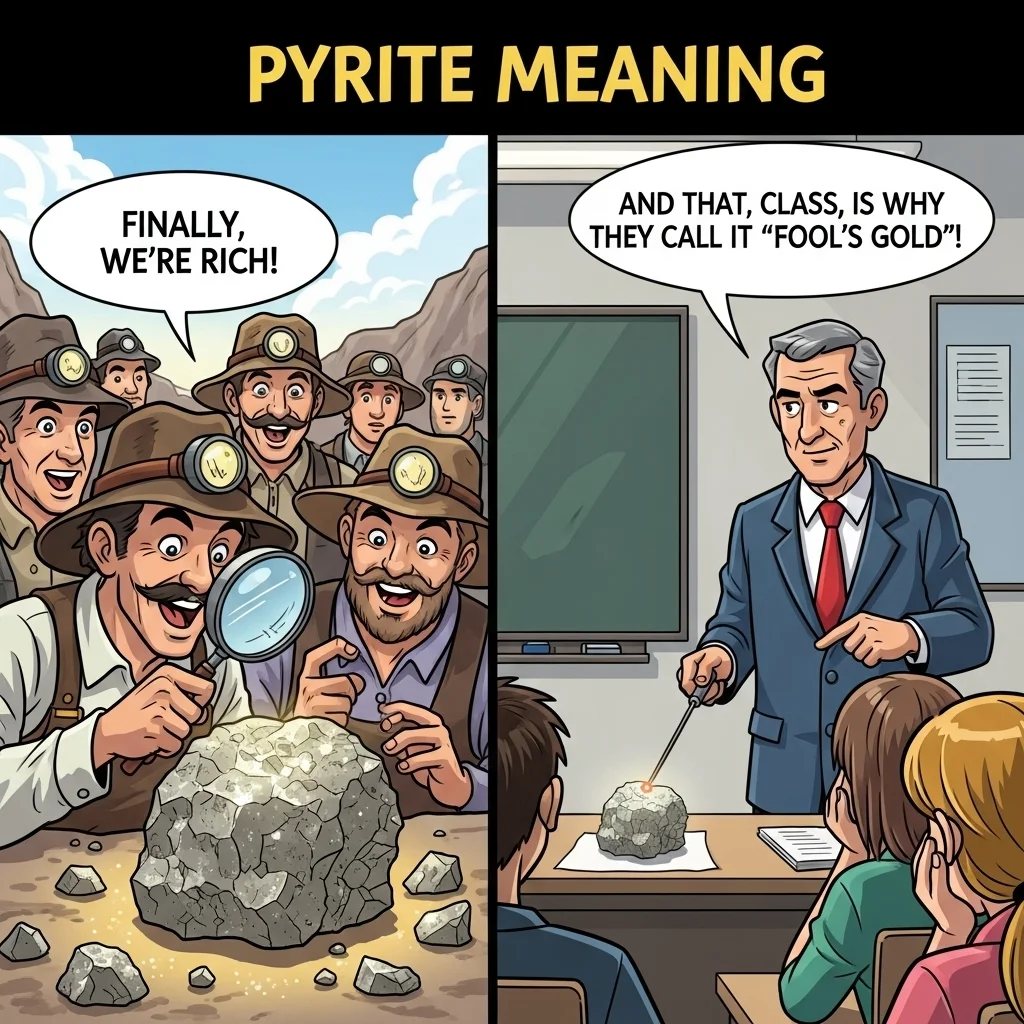
Pyrite is a naturally occurring mineral made of iron and sulfur. It is known for its metallic shine and pale gold color.
Pyrite Meaning in Simple Terms
In simple terms, pyrite is a shiny mineral that looks like gold but is not gold. It is often found in rocks and soil.
Origin of the Word Pyrite
The word pyrite comes from a Greek word meaning “fire.” It was named because pyrite produces sparks when struck against metal.
Why Pyrite Is Called Fool’s Gold
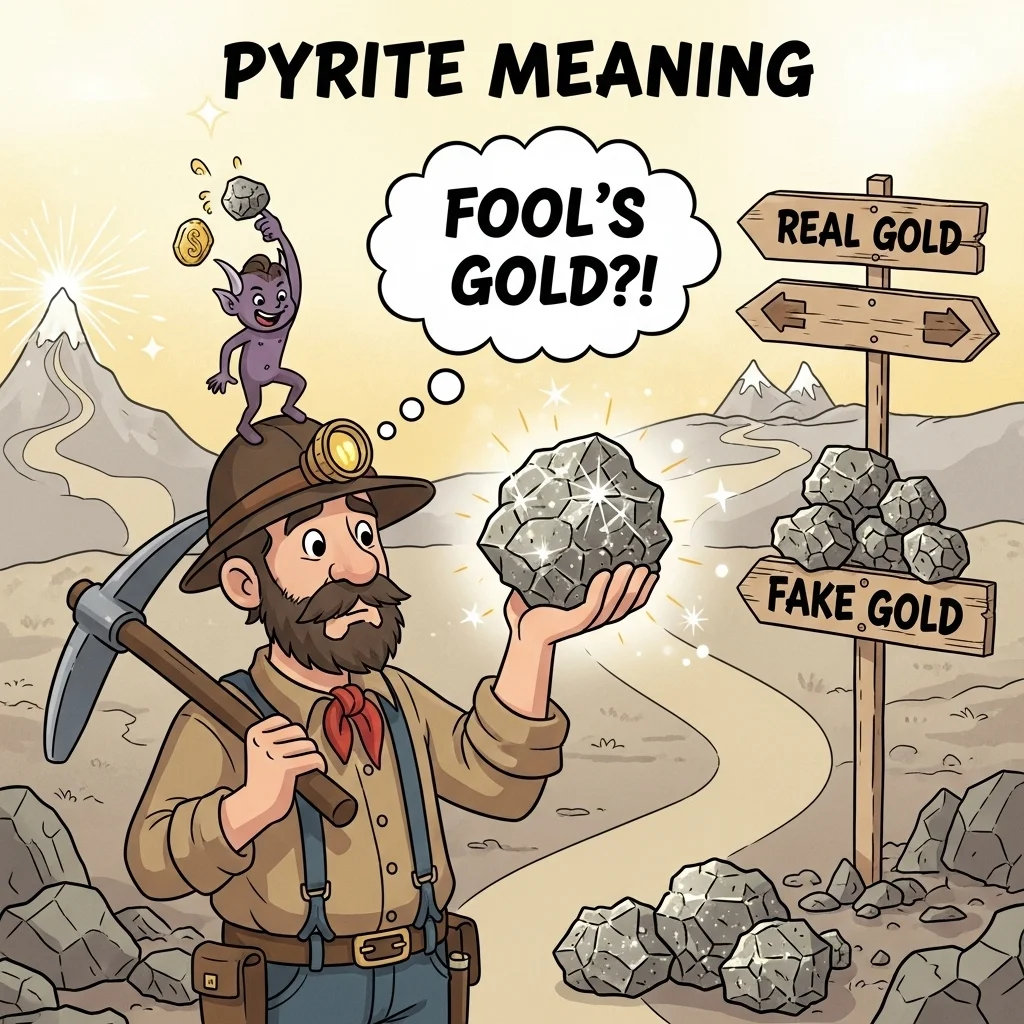
Pyrite is called fool’s gold because many people mistake it for real gold. Its color is similar, but its value and properties are very different.
Pyrite Meaning in Geology
In geology, pyrite is studied as a common mineral found in many types of rocks. It helps scientists understand how rocks form.
Pyrite Meaning in Science
In science, pyrite is important because of its chemical makeup. It shows how iron and sulfur combine in nature.
Physical Appearance of Pyrite
Pyrite usually has a bright metallic shine and forms in cube or crystal shapes. This makes it easy to recognize once you know what to look for.
How Pyrite Is Different From Gold
Pyrite is harder and more brittle than gold. Gold is soft and valuable, while pyrite breaks easily and has much lower value.
Pyrite Meaning in History
Historically, pyrite was used to start fires and sometimes confused with gold during early mining periods.
Pyrite Meaning in Daily Life
In daily life, pyrite is often seen in rock collections, decorative items, or educational displays.
Pyrite Meaning in Jewelry and Decor
Pyrite is sometimes used in jewelry or decoration because of its shiny look. It is chosen for beauty, not value.
Industrial Uses of Pyrite
Pyrite is used in industries to produce sulfur and sulfur-based products. It plays a role in manufacturing processes.
Pyrite Meaning in Education
In schools, pyrite is used to teach students about minerals, chemical elements, and identification skills.
Pyrite Meaning in Collecting Rocks
Rock collectors value pyrite for its crystal shapes and appearance, even though it is not precious.
Common Places Where Pyrite Is Found
Pyrite is found worldwide in rocks, coal beds, and sometimes near gold deposits.
Common Misunderstandings About Pyrite
Many people think pyrite has the same value as gold. In reality, its value is mostly educational or decorative.
Is Pyrite Valuable?
Pyrite is not considered valuable like gold, but it has scientific and industrial importance.
Why Pyrite Still Matters Today
Pyrite matters because it helps industries, education, and scientific research understand natural processes.
Why People Search for Pyrite Meaning
People search for pyrite meaning because its appearance causes confusion and curiosity about whether it is real gold.
Importance of Understanding Pyrite Meaning
Understanding pyrite meaning helps avoid mistakes and improves knowledge about minerals and nature.