
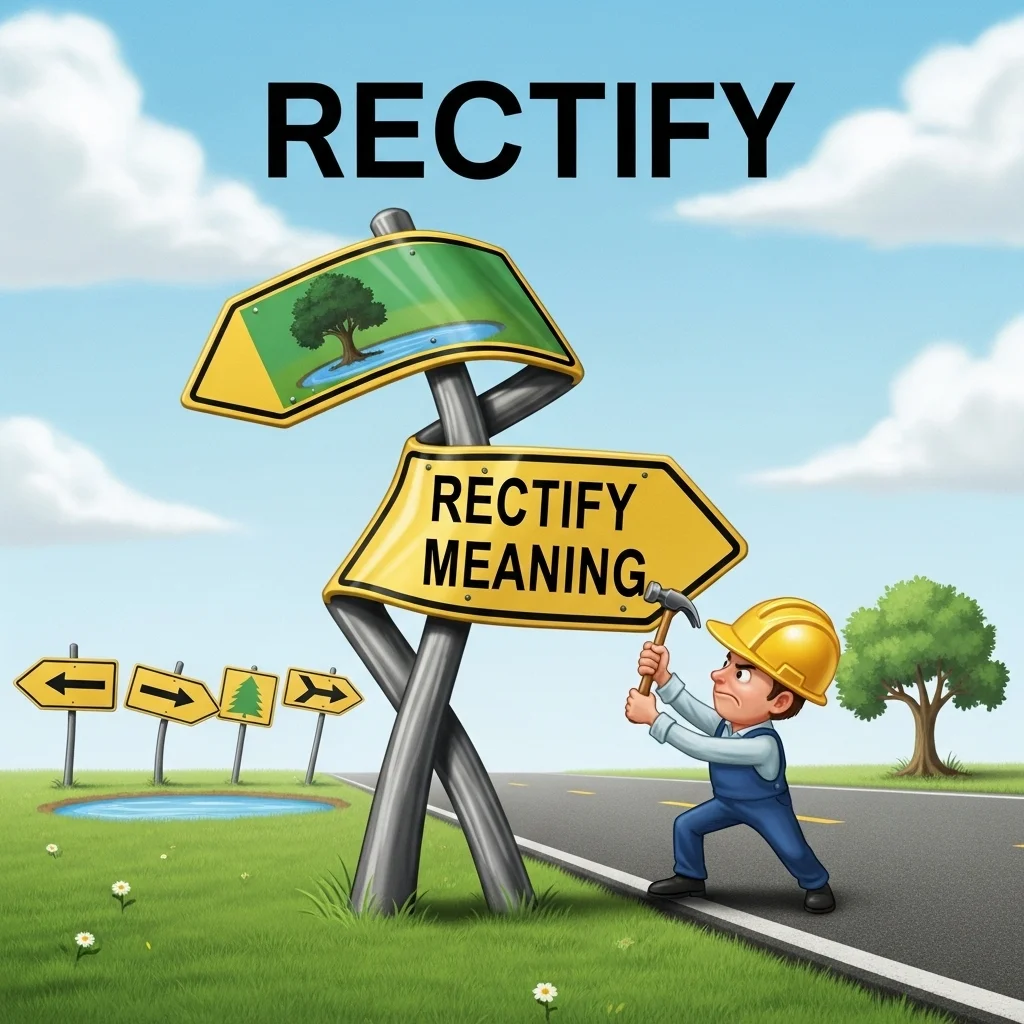

What Does Rectify Mean?
Rectify means to correct something that is wrong. When you rectify a problem, you fix it so it becomes right or acceptable again.
Simple Definition of Rectify
In the simplest terms, rectify = fix or correct. It usually refers to correcting mistakes, errors, or problems.
Rectify Meaning in Daily Life
In daily life, you might rectify:
A billing mistake
A wrong address
A misunderstanding with someone
Example: She rectified the mistake by apologizing.
Rectify Meaning in Formal and Professional Use
The word “rectify” is commonly used in:
Business emails
Legal documents
Official announcements
Example: The company promised to rectify the error immediately.
Rectify Meaning in Legal Context
In legal language, rectify means to formally correct an error, often in records or contracts.
Example: The court ordered the document to be rectified.
Rectify Meaning in Education
In schools or universities, rectify often refers to correcting:
Exam results
Grade errors
Administrative records
Example: The university rectified the grading error.
Rectify Meaning in Technology
In tech, rectify means fixing:
System bugs
Software errors
Configuration issues
Example: The developer rectified the software issue.
Rectify Meaning in Relationships
In personal relationships, to rectify means to make things right emotionally or socially.
Example: He tried to rectify the situation by explaining the misunderstanding.
Rectify Meaning in Business Communication
Businesses use “rectify” to sound professional when addressing problems.
Example: We are working to rectify the issue as soon as possible.
Common Situations Where Rectify Is Used
Rectify is often used when:
A mistake has consequences
A formal correction is needed
Responsibility is acknowledged

Rectify vs Correct
While both mean “to fix,” rectify sounds more formal than correct and is often used for serious or official issues.
Rectify vs Fix
“Fix” is casual and common, while rectify is formal and professional.
Example:
Fix the typo
Rectify the legal error
Rectify vs Resolve
Rectify focuses on correcting a mistake, while resolve focuses on ending a problem.
Common Misunderstandings About Rectify
Many people think rectify means:
To punish ❌
To replace ❌
In reality, it simply means to correct or make right.
Is Rectify Always Formal?
Rectify is mostly formal but can still be used in everyday speech, especially when discussing serious matters.
Can Rectify Refer to Future Action?
Yes. Rectify often implies an intention to correct something soon.
Example: We will rectify the issue tomorrow.
Grammar: How to Use Rectify in a Sentence
Rectify is a verb and usually followed by:
The problem
The mistake
The situation
Example: They rectified the error quickly.
Past, Present, and Future Forms of Rectify
Present: rectify
Past: rectified
Future: will rectify
Synonyms of Rectify
Common synonyms include:
Correct
Fix
Amend
Repair
When Not to Use Rectify
Avoid using rectify when:
The issue is very small or casual
Informal language is more appropriate
Why Rectify Is Still Relevant in 2026
Even in modern communication, rectify remains widely used in:
Corporate settings
Legal language
Official statements